Morning Coffee: How to make Goldman Sachs partner aged 31, and leave for something better. Big Four firms keep cutting graduates
The art of making partner at Goldman Sachs is not unknown. It involves a non-arcane combination of making a lot of money for the firm and impressing a lot of senior people who will then get behind you during a process known as "cross-ruffing", during which they testify on your greatness.
Get Morning Coffee ☕ in your inbox. Sign up here.
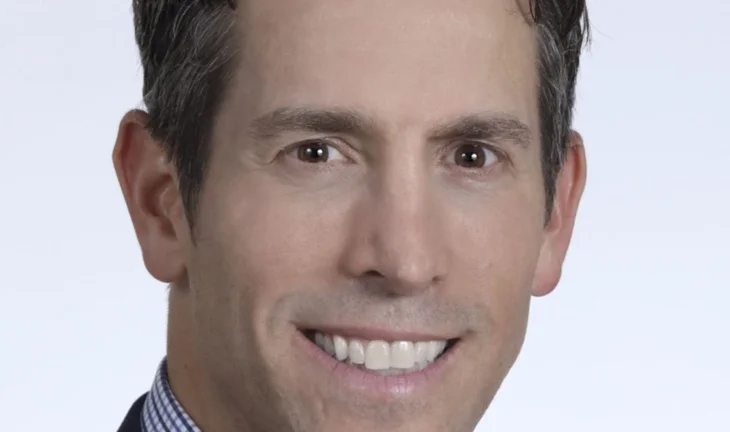
Alan Waxman played this game. He made partner at Goldman Sachs aged 31 and left again aged 33. He then co-founded Sixth Street, the private credit firm with $110bn in assets under management, aged 34. Aged 50, Waxman is now in the Wall Street Journal, holding a dominant stance, and opining about the future of private credit.
Private credit is becoming commoditized, says Waxman. It's turning into a factory that wants "to get as many widgets out the door as fast as possible, as cheap as possible…regardless of what the environment is.’" He blames the huge amounts of money flowing in from insurance companies and individual investors: private credit firms are under pressure to invest money as quickly as possible, irrespective of the opportunities on offer.
Sixth Street, which Waxman founded in 2009 aims to be more thoughtful than this. Sixth Street likes creative structures. It's 'constantly pivoting.' It revolves around a $30bn fund called Tao which raises money as needed and which doesn't return capital to investors over a set period. “Just because you can raise the capital doesn’t mean you should,” observes Waxman.
It's made Waxman rich. None of this was a foregone conclusion, though. As Waxman admitted himself, when he arrived at Goldman as an analyst, he knew nothing about finance and had to be "strategic" about developing his skills.
The WSJ says he spotted a strategy almost immediately. As a junior analyst, Waxman was sent to review a portfolio of loans made by a nonbank lender to ratio and TV companies. Goldman wanted to buy the loans, and Waxman noticed that the lender was charging hefty interest rates because it was lending against underlying assets and not just cash flows, and that banks wouldn't do business this way. “I thought: Why can’t this be applied across other industries?,” recalls Waxman.
Waxman went into Goldman's special situations unit, where he invested Goldman's own money. 10 years later, he made partner. But when Goldman was banned from investing like this after the financial crisis in 2009, the WSJ says Waxman decided to leave "the next day" and to replicate Goldman's investing structure in what eventually became Sixth Street.
That was 16 years ago. Maybe things were easier then. Contemporary international relations graduates who want to be like Waxman have a blueprint though: start at a big bank, keep your eyes open for untapped opportunities, stick with them, leave immediately to do your own thing if you're impeded by circumstances beyond your control. Strategic petulance.
Separately, graduate jobs at the Big Four used to be a soft option for students who couldn't get into investment banking jobs.
Times have changed. Big Four jobs are still easier to achieve, but they're full of jeopardy in the age of AI.
The Financial Times reports that PWC is planning to cut 175 junior auditors and 270 audit associates. The problem isn't AI directly, but the fact that no one is leaving voluntarily. - In the past, junior auditors would leave for banks and corporates and entire swathes of juniors would leave. That's not happening any more.
At the same time, though, AI is eliminating tasks done by the Big Four's junior auditors and consultants. Fewer juniors are being hired and the work that remains is being shifted to Malaysia and the Philippines. The safe option is no longer that.
Meanwhile...
Hamza Lemssouguer was a young star at Credit Suisse. Today, his hedge fund Arini employs one of Europe's largest high yield credit research teams and has $9-$10bn in AUM. (Rupak Ghose)
M&A isn't doing well globally, but it's going fine in the US. U.S. deal value this year through June 25 is up about 10% from last year and at its highest level in three years, according to the London Stock Exchange Group. Deals under $1bn are down but there have been some big deals like Charter's $22bn purchase of broadband provider Cox Communications. (WSJ)
In 2022, Goldman Sachs bought three hotels in Northern Greece. A few months ago, it suddenly sold them and barely broke even. Employees who worked on the investment are no longer with the firm. (WSJ)
UBS bankers are moving on. Joe Palombini is joining Banco Santander SA’s leveraged finance team while Colin Grady departs for Wells Fargo & Co.’s financial sponsors team. (Bloomberg)
The life of a Goldman Sachs partner running the entertainment investment banking business. "Once I'm in Central Park, there's nothing better than just having some time surrounded by the earth and the trees." (Business Insider)
David Zimbler, a senior portfolio manager who ran a large oil-trading team, is retiring from Millennium aged 60. Various other traders are also leaving, including Pavel Favinsky, a senior PM who traded energy credits and who left this spring after only a handful of months on the job. (Business Insider)
Hedge funds are paying $1m for AI engineers. (Financial News)
American families earning $350k don't feel rich. This might be because they're spending $9k a year on children's sports. “I feel like we’re just the normal, run-of-the-mill, middle-class family.” (WSJ)
Rich American expats keep buying houses in London. They tend to congregate in Kensington, Chelsea, Notting Hill, and anywhere else featured in a Richard Curtis movie. In 2024, 40 percent of properties over $15 million were sold to American buyers, according to data from Sotheby’s International Realty. (Airmail)
Talented, charismatic bankers in their 50s keep coming back to the industry after retiring. They are suffering from existential angst. (FT)
Have a confidential story, tip, or comment you’d like to share? Contact: +44 7537 182250 (SMS, Whatsapp or voicemail). Telegram: @SarahButcher. Signal: sarahbutcher.22 Click here to fill in our anonymous form, or email editortips@efinancialcareers.com. Signal also available.
Bear with us if you leave a comment at the bottom of this article: all our comments are moderated by human beings. Sometimes these humans might be asleep, or away from their desks, so it may take a while for your comment to appear. Eventually it will – unless it’s offensive or libellous (in which case it won’t.)