Morning Coffee: The bank that cut 25% of its MDs is ready to compete with JPMorgan. The 20 private equity firms you may not want to work for
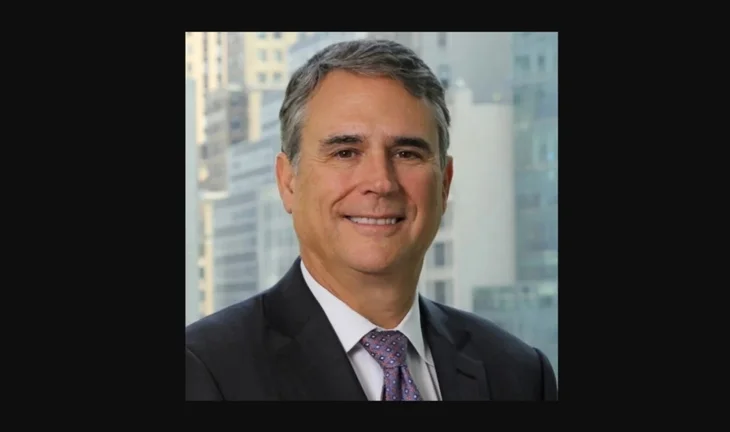
The last time that Michael Roberts, the ex-Citi corporate banker running HSBC's corporate and investment bank, suggested his new home is becoming superior to Wall Street banks, it didn't land well internally. Undeterred, Roberts is strumming the same song.
Get Morning Coffee ☕ in your inbox. Sign up here.
In the Financial Times today, Roberts says HSBC's aim is to become the number one corporate and institutional bank (CIB) globally. HSBC, which has a $3.2trn balance sheet, can compete with JPMorgan, which has a $4trn balance sheet, says Roberts. Jamie Dimon beware.
Roberts spent 33 years at Citi before joining HSBC in 2019. At Citi, he was a lending officer and global head of corporate banking. At HSBC, Roberts' focus is the areas he knows - he says the bank can compete most vigorously with JPMorgan in payments and transaction services. “We’re not a big investment bank," he declares. "We are a 99 per cent corporate commercial bank." JPMorgan is both.
HSBC combined its corporate and institutional banks in late 2024 and then shrank its investment bank this time last year. The unexpected closure of the M&A and ECM businesses outside of Asia and the Middle East was seen by some insiders as brutal. Quoting unnamed sources, the FT says it resulted in 25% of HSBC's CIB managing directors (MDs) being cut.
Like HSBC's CEO Georges Elhedery, Roberts is unapologetic. There were "a lot of double roles, a lot of duplication, a lot of inefficiencies," he tells the FT. There was "excess cost," "excess people." Last June, an unnamed senior executive at HSBC told the Financial Times HSBC had been paying many MDs seven figures for doing nothing much.
As Roberts reshapes the bank, his deputy Gerry Keefe has become known internally as his henchman. Roberts admits to finding it "frustrating" that some people are still not on the bank's combined CIB bus. As he seeks to make the bank a debt powerhouse, he still needs debt capital markets bankers to originate, package and distribute its loans. Last year, HSBC's DCM bankers were grumbling about poor pay. Several have since left of their own accords. If HSBC wants to be the top CIB, maybe their bonuses will be bigger this year.
Separately, as private equity firms struggle with exits that don't involve their own secondary funds, Forbes has assembled a helpful list of 20 zombies that you possibly don't want to work for now.
We are not listing the zombies, some of whom already appear to be objecting to that designation but you can see them all here. Many seem to be busy raising continuation funds to buy their previous funds containing investments they haven't been able to exit.
“If you had two good funds and then a bad fund, you have some hope. You’ve got to convince people that the next fund will be better,” declares Steven Kaplan, who specialises in private equity at University of Chicago. “If you’ve had two bad funds, you’re probably out of luck.”
Meanwhile...
Newly released Epstein files show that Apollo Global Management executives including chief Marc Rowan held wide-ranging discussions over the firm’s tax arrangements with Jeffrey Epstein throughout the 2010s. (Financial Times)
Apollo Commercial Real Estate Finance sold a $9bn loan portfolio that had traded at 77% of book value to Athene, its insurance arm, at 100% book value. (Financial Times)
New Holland Capital is a $7bn hedge fund that aspires to have eight to 10 equity sector specialists with no overlapping strategies. It considers itself an alternative to the multistrategy model. “I like to say it’s the ‘carousel of love’ — I went to Citadel, I went to Millennium — and that pretty much encompasses my view of pod exhaustion." (Bloomberg)
Kevin Warsh wrote last year that reductions in the benchmark Fed funds rate should be offset by tighter money on Wall Street. (Financial Times)
Remembering Scott Bessent's college days: "I went from computer science to art history and finally landed on political science, but if I were able to do it all over again, I would choose to double major in psychology and philosophy." (YaleAlumniMagazine)
The Bank of England is cutting jobs and shifting employees to Leeds where it has 100 people currently and wants 500 by next year. (Bloomberg)
33% of students in the UK get first class degrees now. (The Times)
Raman Bhatia, the boss of Starling Bank, made people return to the office four days a week. There were complaints that this was creating a “bland grey corporate hellscape filled with dead-eyed zombies” but Bhatia says only four or five of his 3,800 employees left for this reason. (The Times)
Investment firm Architect Capital is buying a 60% stake in Only Fans at a $3.5bn valuation. (WSJ)
When an AI emails to apply for a job. (Marginal Revolution)
Have a confidential story, tip, or comment you’d like to share? Contact: +44 7537 182250 (SMS, WhatsApp or voicemail). Telegram: @SarahButcher. Signal: sarahbutcher.22 Click here to fill in our anonymous form, or email editortips@efinancialcareers.com.
Bear with us if you leave a comment at the bottom of this article: comments are moderated intermittently by human beings. Sometimes these humans might be asleep, or away from their desks, so it may take a while for your comment to appear. You must take sole responsibility for comments you post on this site. We will take reasonable steps to weed out anything that we consider to be offensive or inappropriate.