Morning Coffee: Meet London's most unusual top banker of tomorrow. JPMorgan says so far, so good
The “thirty under thirty”, or “forty under forty” lists of up-and-coming young people that magazines often publish have a bit of a mixed reputation. Since they are scoring on potential rather than on delivery, they often pick up youngsters with a gift for self-promotion and good media contacts and this isn’t always very well correlated with subsequent success. (The Forbes “30 under 30” list is notorious for anointing a surprising number of actual fraudsters.)
Get Morning Coffee ☕ in your inbox. Sign up here.
But the Bloomberg “Leading Lights” of UK M&A banking is unlikely to suffer from that problem. It’s based on objective data, as every major transaction has an “execution lead” associated with it, and this is the banker who has been given most responsibility for the deal by their employer. Most of the time, the name recorded is one of a handful of acknowledged rainmakers – people like Mark Sorrell at Goldman Sachs or Dwayne Lysaght at JPMorgan. So if your name is on the list and you’re under 50 years old, it’s likely that you really deserved that credit.
There's an equivalent league table of up and comers. Again, this has the advantage that it’s representing the next generation of investment banking leadership based on reality rather than PR. However, for this exact reason – it’s based on the reality of the industry as it stands in 2025 – the list has got some DEI issues.
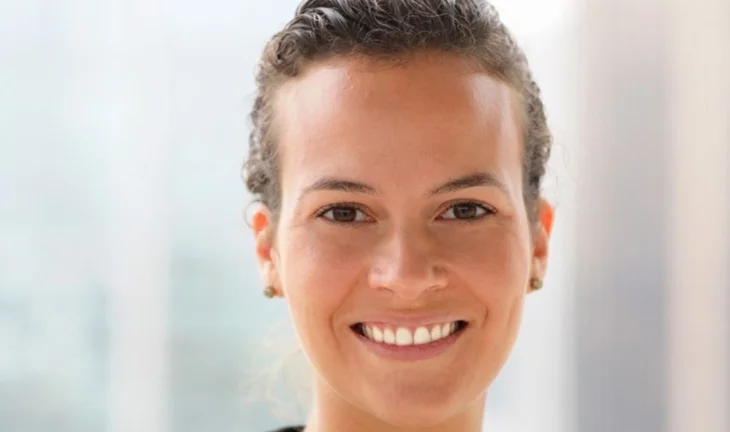
Specifically, it’s only got one woman on the list; Sabina Pennings from Rothschild. This represents no progress at all from 2022, when a similar exercise also only included Cara Pazdon from Goldman Sachs, plus 29 men.
It therefore seems that the “pipeline” of top female bankers in London is as empty as ever. As Rothschild isn’t a US-headquartered bank, it may be more likely than its competitors to preserve its Women’s Network (at which Sabina Pennings recently spoke about the challenges of managing a family at the same time as nearly $7.5bn in M&A transactions). But it can’t do all the lifting on its own.
They say that “a principle isn’t a principle until it’s cost you something”, which casts a rather unappealing light on the haste with which many banks and advisory firms have abandoned policies and targets to which they had claimed to be committed until the first moment they appeared inconvenient. But in many ways, the problem here is the opposite. By ignoring half the human race (a half which includes plenty of serious M&A talent), the London investment banking industry is leaving money on the table. Sooner or later, top bankers will end up understanding that keeping all the credit in a small boy’s club is a luxury they can’t really afford.
Elsewhere, we're only halfway through February, but the news from Jennifer Piepszak of JPMorgan is that revenues are looking all right. Investment banking fees for the first six weeks of the year are up in the “mid-teens”, while trading revenues are up “low double digits”. (Aren’t those the same thing?)
To an extent, there is an element of “so far, so good, so what” to this sort of statement; we haven’t really yet seen the boom in either IPOs or M&A activity which the Trump era was expected to herald. Piepszak suggested that equity issuance “should see a real resurgence” while M&A “may take time to pick up”, although companies “are more optimistic about doing deals”.
But really, there’s no visibility at the moment. The commentary from top bankers suggests that the deal pipeline is continuing to fill, but there is plenty of scope for things to either dry up or come in a rush, depending on any number of economic and geopolitical uncertainties. Cautious optimism seems to be the prevailing attitude rather than euphoria, which for the time being makes it unlikely that there will be a quick return to aggressive hiring.
Meanwhile …
Back in the 2022-3 deal slump, it might have looked like a sensible move to take a couple of years out of the labour market and go to business school. However, the labour market that grads are going into is quite slack, and lots of companies are reluctant to take on middle managers into roles that might be made obsolete by AI – and so newly minted MBAs are “living paycheck to paycheck, watching what feels like the rest of my colleagues and classmates move forward with their lives”. (Business Insider)
After trying to shrink it, platformise it and make it capital-light, David Solomon of Goldman Sachs appears to have come to the realisation that the only thing you can really do with a big trading business is complain about how investors don’t value it highly enough. (Bloomberg)
Like junior bankers, AI chatbots have a very hard time uttering the words “I don’t know”. And interestingly, it appears that the reasons for this might be similar too; the algorithm rewards hallucinations because “if you don’t guess anything, you don’t have any chance of succeeding”. Since you can’t bully robots, researchers are trying to find other ways to persuade them not to make things up. (WSJ)
“My impression from the outside is that the level of focus and thoroughness, and discipline, with which the board is thinking about questions of succession is as high as ever” is a very diplomatic reply from JPMorgan CFO Jeremy Barnum to a question about how visions of the post-Jamie Dimon era have developed now that Dan Pinto and Jenn Piepszak have left the race. (Bloomberg)
Apparently the Financial Conduct Authority has decided that although some of its email traffic is “created in the course of its regulatory duties” and needs to be archived for 25 years, other emails are just junk and can be auto-deleted after 12 months. Staff are “being trained” on identifying which is which. What could possibly go wrong? (FT)
When faced with a hostile takeover bid, executives at Banco Sabadell got their priorities right – they significantly expanded the number who would be eligible for very generous payoffs in the event of a change of control. (Bloomberg)
Have a confidential story, tip, or comment you’d like to share? Contact: +44 7537 182250 (SMS, WhatsApp or voicemail). Telegram: @SarahButcher. Click here to fill in our anonymous form, or email editortips@efinancialcareers.com. Signal also available.
Bear with us if you leave a comment at the bottom of this article: all our comments are moderated by human beings. Sometimes these humans might be asleep, or away from their desks, so it may take a while for your comment to appear. Eventually it will – unless it’s offensive or libellous (in which case it won’t.)